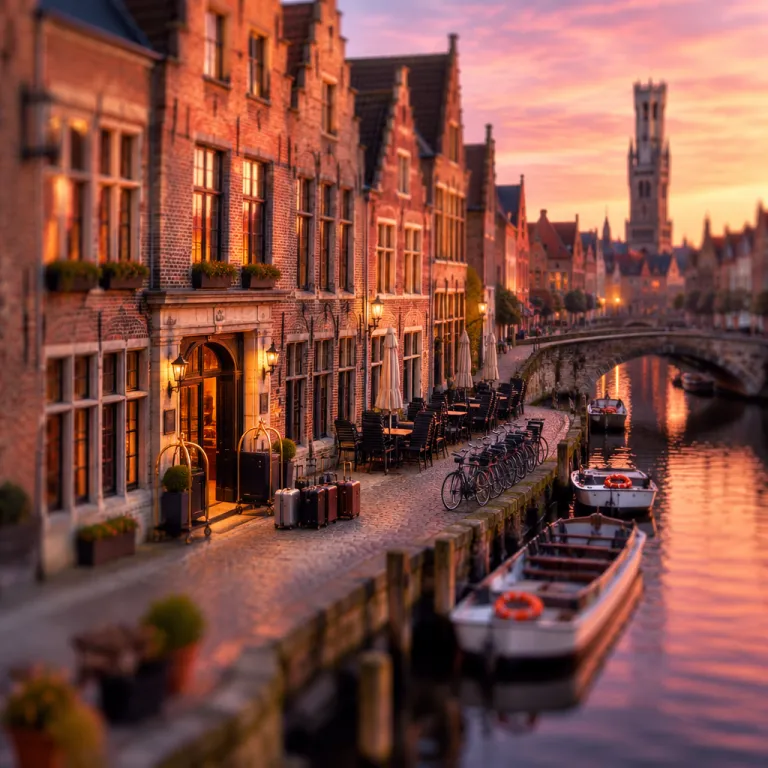
World Tourism Day in Bruges city: when a medieval postcard meets mass tourism
World Tourism Day lands differently in Bruges city, where an average of 27,500 tourists share streets with just 20,000 residents in the historic core. On a peak day the balance between sustainable pleasure and overtourism pressure is visible in every narrow lane, from the Markt to the Burg, as short term stays and day trippers reshape daily rhythms. For a solo traveler planning a luxury stay, this is the moment to decide whether your visit adds to mass tourism or supports long term responsible travel in Bruges Belgium.
Bruges is not alone ; european destinations such as Venice, Barcelona and Dubrovnik wrestle with similar waves of tourist arrivals that strain historic sites and quality life for locals. Yet the scale in this compact city center feels more intense, because the medieval street plan concentrates people into a walkable core where every walking route seems to pass the same canal views that fill every Belgium photo on social media. That is why bruges overtourism sustainable travel has become more than a policy phrase ; it is now a filter for how luxury guests choose where to sleep, where to spend, and how many days they stay.
City Bruges authorities have frozen new hotel construction and new short term rental permits in the old town, a clear signal that the city wants fewer but better stays rather than more beds at any cost. For travelers, that means the most desirable properties inside Bruges city walls are not multiplying, so your choice of hotel and neighborhood matters more than ever if you care about sustainable travel and the daily life of residents. Treat your booking as a vote for the version of tourism you want to support, not just another bucket list tick in a crowded list of european destinations.
Bruges versus Venice, Barcelona and Dubrovnik
Comparisons with Venice, Barcelona and Dubrovnik are inevitable, because each city has become a shorthand for overtourism in Europe. Yet Bruges Belgium differs in one crucial way ; it is not a largest city with multiple districts to absorb tourists, but a compact medieval enclave where every extra tourist or group of day trippers is immediately felt by local residents. That makes every luxury stay a more visible part of the tourism equation, especially around World Tourism Day when policy and practice collide.
In Venice, cruise ships dominate the debate, while in Barcelona and Dubrovnik the focus often falls on cruise ships and unchecked short term rentals that hollow out central neighborhoods. In contrast, city Bruges has moved early to cap hotel growth in the city center and to regulate short term rentals, aiming to protect both historic sites and the quality life of people who still call Bruges city home. For travelers, this means that choosing a hotel aligned with responsible travel principles is not just a nice gesture but a way to support a city that is actively trying to avoid the worst forms of mass tourism.
When you plan your travel, think of Bruges not as a quick day trip but as a place where staying longer in a carefully chosen property can reduce per day impact. A two or three day stay in a sustainable hotel spreads your footprint over more experiences, more local meals and more walking routes beyond the busiest squares, instead of concentrating it into a single intense visit. That shift from day trippers to overnight guests is central to bruges overtourism sustainable travel, and luxury travelers are uniquely positioned to lead it.
How Bruges is rethinking tourism: smart strategies and climate goals
Behind the cobbles and canals, Bruges city is quietly positioning itself as a laboratory for sustainable travel rather than a cautionary tale of overtourism. The Brugge Naar Morgen plan sets ambitious climate goals, targeting a 50 percent CO2 reduction by 2030 and climate neutrality by 2050, and tourism policy is being pulled into line with those numbers. For a traveler choosing a premium hotel, this means your stay is part of a broader city strategy, not just a private experience.
World Tourism Day arrives as Bruges is shortlisted for the European Capital of Smart Tourism award, a recognition that links digital tools, heritage protection and responsible travel in one european framework. You can read more about this shift toward smart, sustainable tourism in Bruges through this overview of Bruges as a European Capital of Smart Tourism candidate, which explains how the city uses data on tourist arrivals and walking flows to protect fragile streets. For guests, that translates into better managed routes, clearer guidance on when to visit Bruges hotspots and more incentives to explore lesser known quarters beyond the classic city center loop.
The Brugge Naar Morgen roadmap also shapes how hotels think about energy, water and waste, pushing luxury properties to align with sustainable travel rather than just marketing it. A detailed breakdown of what sustainable tourism looks like in practice in Bruges shows how measures such as low emission zones, improved public transport and support for local suppliers all intersect with where tourists sleep and eat. When you choose a property that sources from local producers, supports residents through fair employment and encourages walking or cycling, you are effectively voting for the Brugge Naar Morgen vision with your room rate.
World Tourism Day as a mirror for luxury travelers
World Tourism Day is not a festival in Bruges ; it is a mirror held up to the city and to the people who visit it. On a symbolic level, it asks whether tourism in Bruges Belgium still enhances the quality life of residents or whether tourist arrivals and mass tourism have tipped the balance too far. For luxury travelers, the question becomes sharper, because higher nightly rates can either fund better jobs and preservation of historic sites or simply inflate prices for everyone.
When you book a premium stay around this date, look for hotels that publish clear sustainability reports, support local artisans and encourage responsible travel behaviors such as longer stays and off peak visits. These properties tend to be more honest about the trade offs of tourism in a compact european city, acknowledging that overtourism is real while still believing that travel can be a force for good. Aligning your booking with such values is the essence of bruges overtourism sustainable travel, especially in a season when the global tourism industry is reflecting on its impact.
Ask direct questions before you confirm your room ; how does the hotel manage waste, what is its energy mix, how does it support the neighborhood beyond its own walls. A property that welcomes these questions and answers them with specifics, not slogans, is more likely to be a genuine partner in sustainable travel rather than a passive beneficiary of mass tourism. In a city where every extra tourist is felt, that level of transparency is not a luxury add on but a baseline expectation.
Choosing where to stay: sustainable luxury beyond the postcard streets
For a solo explorer, the most powerful overtourism decision is not whether to visit Bruges but where and how to stay. The freeze on new hotels in the historic city center means that existing properties carry extra responsibility for how tourism feels on any given day, especially when 27,500 tourists share the same compact grid. Choosing a hotel just beyond the busiest canals can ease pressure on central streets while still keeping you within easy walking distance of every major site.
Look at neighborhoods such as Sint Gillis or the area around the Smedenpoort, where you can still walk to Markt in ten to fifteen minutes but sleep on quieter residential streets. Staying in these areas supports local businesses that rely on both residents and visitors, from bakeries to wine bars, rather than concentrating all spending in the most touristed lanes of Bruges city. This is where bruges overtourism sustainable travel becomes tangible ; your room key can shift economic gravity away from the most saturated corners of the city.
When comparing properties, go beyond the green leaf icon and read how sustainability is implemented day by day. The guide to how Bruges hotels approach sustainability in practice highlights measures such as renewable energy use, low impact laundry systems and partnerships with local cultural institutions. A hotel that invests in these areas is not only reducing its environmental footprint but also helping to preserve the historic sites and cultural life that drew you to Bruges Belgium in the first place.
Luxury, length of stay and your per day impact
One of the paradoxes of overtourism is that short term visits often cause the greatest strain, even when tourist numbers look manageable on paper. A single intense day in Bruges city, packed with bucket list sights and social media stops, concentrates pressure on the same streets, the same cafés and the same viewpoints. Extending your stay to two or three nights spreads that impact, allowing you to slow down, explore different walking routes and support a wider range of local businesses.
From a sustainability perspective, a longer stay in a well run luxury hotel can be more responsible than two separate short term trips to different european destinations. Your travel emissions to reach Bruges Belgium are amortized over more days, while your spending can be directed toward experiences that benefit residents, such as independent galleries, neighborhood restaurants and small performance venues. This is the quiet logic behind bruges overtourism sustainable travel ; fewer trips, longer stays, deeper engagement with the city and its people.
Ask your hotel for suggestions that go beyond the standard canal cruise and chocolate tasting, and prioritize experiences that involve smaller groups, walking or cycling and direct contact with local hosts. A private beer tasting in a family run bar, a guided architecture walk with a Bruges based historian or a visit to a lesser known museum can all deliver a richer experience with a lighter footprint. Luxury in this context is not about excess but about access, curated in ways that respect the daily life of residents.
How to move, spend and share: practical ways to be a responsible guest
Once you have chosen a hotel, the next layer of bruges overtourism sustainable travel is how you move through the city day by day. Bruges is built for walking, and most luxury properties in and around the city center place you within a fifteen minute stroll of key historic sites, so there is rarely a need for taxis. Walking or cycling not only reduces emissions but also spreads your presence across more streets, easing pressure on the most photographed corners of Bruges city.
Time of day matters as much as mode of travel, especially in a compact european city with high tourist arrivals. Early mornings and late evenings offer a calmer experience of Bruges Belgium, when residents reclaim the streets and the light softens on the canals, while midday often brings the peak of day trippers and group tours. Planning your must see visits for the shoulders of the day and using the busiest hours for quieter museums or hotel spa time is a simple but effective overtourism strategy.
Spending patterns also shape the kind of tourism a city receives over the long term. Choosing independent restaurants, local design shops and small cultural venues over global chains keeps more value in the community and supports a diverse urban fabric that benefits both residents and tourists. In a city where mass tourism can easily flatten character, your card choices are a direct expression of responsible travel.
Social media, cruise ships and the stories we tell about Bruges
Social media has turned Bruges into a bucket list stop for people who might once have focused on larger european destinations, amplifying the visual appeal of canals and gables while compressing the city into a handful of repeatable shots. That same dynamic fuels quick day trips from nearby hubs and from cruise ships docking in Zeebrugge, sending waves of tourists into the city center for just a few hours. The result is a pattern of tourism that maximizes crowding while minimizing the deeper experience that comes with slower travel.
World Tourism Day is a useful moment to rethink how you share your own Bruges stories online. Instead of adding another identical Belgium photo from the Rozenhoedkaai, consider highlighting quieter streets, local businesses or moments that show the city as a living community rather than a backdrop. This shift in narrative supports bruges overtourism sustainable travel by signaling that the value of Bruges city lies not only in its postcard views but in the daily life of its people.
Finally, remember that Bruges is not the largest city in Belgium but a finely balanced historic organism, more comparable to Venice or Dubrovnik than to Brussels in its sensitivity to mass tourism. Your choices as a tourist, from the length of your stay to the hotel you book and the way you move, ripple through that organism in ways you may not immediately see. On World Tourism Day, in a city that hosts 27,500 visitors daily, the most luxurious thing you can offer Bruges is your attention to how you travel.
FAQ
Is Bruges still worth visiting given concerns about overtourism?
Bruges remains worth visiting if you approach the city with a responsible travel mindset. Staying longer than one day, choosing a sustainable hotel and exploring beyond the busiest streets can turn your trip into a positive contribution rather than another strain on the city center. The key is to treat Bruges as a place to inhabit for a few days, not just a quick bucket list stop.
When is the best time to visit Bruges to avoid the biggest crowds?
The shoulder seasons around late spring and early autumn generally offer fewer tourist arrivals than peak summer and major holiday periods. Within any season, early mornings and evenings are calmer in the city center than midday, when most day trippers and group tours arrive. Planning your main sightseeing for these quieter windows can significantly improve your experience.
How can I choose a genuinely sustainable luxury hotel in Bruges?
Look for hotels that publish clear information about their environmental measures, such as energy use, waste reduction and water management, and that work with local suppliers and cultural institutions. Properties that encourage longer stays, promote walking or cycling and engage with neighborhood residents are usually more aligned with sustainable travel goals. Do not hesitate to email the hotel with specific questions before booking ; serious players will respond with concrete details, not vague slogans.
Does staying outside the historic center really help with overtourism?
Yes, staying just beyond the most crowded canals and squares can ease pressure on the core while still keeping you within walking distance of major sites. Your presence and spending then support a wider range of local businesses, including those in more residential streets that see fewer tourists. This pattern of dispersed stays is one of the most practical ways visitors can support bruges overtourism sustainable travel.
What are some low impact activities for solo travelers in Bruges?
Low impact options include guided walking tours with small local operators, visits to lesser known museums, independent galleries and neighborhood cafés away from the main squares. Renting a bike to explore the city ramparts or nearby villages can also spread your footprint beyond the most saturated streets. These choices often deliver a richer, more personal experience while aligning with the city’s sustainable tourism goals.